RAAY RE Team
Current Situation in Germany, European Impulses, and Best-of-Breed Approaches for Sustainable Optimization
The way tenants communicate with their property management (PM) companies or landlords, and how internal processes are organized, significantly shapes stakeholder satisfaction and the economic viability of property management. A representative Bitkom study from January 2026 highlights that traditional phone calls still dominate in Germany: 82% of tenants contact their property management or landlords by phone, and 66% use letters. Digital channels such as email are used by 58%, while messenger services (e.g., WhatsApp) are used by only 6%, video calls by 2%, and specialized apps or self-service portals by just 1%.
At the same time, tenants without access to digital offerings express interest: 22% would use apps, 18% would use online portals, and 16% would use messenger services. The low adoption of digital tools is primarily because many – especially smaller and private – managers do not provide them. The study makes it clear: There is demand for modern, efficient communication, but the supply lags behind.
The Current State of Digitalization in German Residential and Condominium Property Management
This observation aligns with the EBZ Study “IT and Digitalization in House and WEG Management 2025.” Among 136 surveyed property management companies (mostly executives), only 40% have a clearly defined digitalization strategy – a share that is even lower for smaller portfolios. More than 73% see the shortage of skilled workers as the biggest challenge, particularly in labor-intensive processes such as maintenance management and routine administrative tasks.
Although nearly three-quarters of companies comprehensively use ERP or property management systems, the potential for process integration and automation often remains untapped. Daily operations continue to rely heavily on classic tools: electronic banking functions (88%) and Microsoft Office programs (68%). The IT landscape is frequently fragmented, with parallel isolated solutions and many manual steps. Systematic standardization of recurring processes – such as service charge settlements, dunning, or standard inquiries – is often lacking. The result: high manual effort, longer processing times, media disruptions, and limited scalability. Meanwhile, expectations from tenants and owners regarding transparency, speed, and sustainability (ESG) continue to rise.
In short: German property management stands at a turning point. The analog core is robust, but the efficiency reserves offered by digitalization and automation are substantial – and have so far only been partially realized.
How Do Other European Countries Approach This?
In other European markets, integrated digital solutions are more widespread and have proven themselves in practice. In the United Kingdom, leading property management platforms (such as MRI Software, Entrata, AppFolio, or Yardi) consistently rely on self-service tenant portals and mobile apps. Tenants can make rent payments, submit repair requests with photos and descriptions, access documents, and track processing status in real time. In-app messaging and automated work order generation significantly reduce manual coordination. Digital leasing processes with online applications and e-signatures are standard. The goal: Empower tenants to handle routine matters themselves, while management focuses on complex or sensitive cases.
In the Netherlands, pilot projects (e.g., with platforms like HousingAnywhere) show impressive results: Integrated digital onboarding and automated income and credit checks can reduce setup time for new tenancies by over 60%. In Scandinavia (Sweden, Denmark), digital services for housing associations and professional managers are largely a given – often mobile-first with real-time communication, automated workflows, and high tenant acceptance.
Common success factors of these approaches:
- Centralized, integrated platforms rather than fragmented, individual solutions.
- Self-service for standard processes, combined with personal channels for complex matters (hybrid approach).
- Automation of routine tasks (e.g., automatic generation of work orders from requests, status updates, payment reminders).
- Data integration and transparency for tenants, owners, and managers.
- Focus on user experience: Simple, familiar interfaces (apps, messenger integration, web portals).
These models demonstrate that modern property management does not necessarily mean losing personal service—on the contrary, it creates capacity for precisely those value-adding activities that tenants and owners appreciate.
Best-of-Breed Suggestions for Optimizing Communication and Process Efficiency
From these insights, practical, sequential recommendations can be derived. The key is a step-by-step, strategically grounded transformation that begins with process standardization and gradually integrates digital and intelligent tools.
- Standardize Processes as the Foundation
Before introducing tools, recurring workflows (repair requests, settlements, dunning, document provision) should be clearly defined and unified. Only standardized processes can be meaningfully automated. This relieves skilled staff and reduces sources of error—a recommendation also emphasized in the EBZ study. - Establish Hybrid, Tenant-Centric Communication Channels
A modern setup combines a central tenant portal or self-service app (for requests, status tracking, document access, and payments) with proven channels such as email and messenger services (e.g., WhatsApp Business for quick, documented responses). Phone and video remain available for sensitive or complex topics. The aim is noticeable relief for routine inquiries while maintaining accessibility. - Integrate Systems and Eliminate Media Breaks
The existing ERP or property management system should be linked with a tenant portal, document management, and banking solutions. Ideally, this creates real-time updates (e.g., “Your repair request has been forwarded to the contractor—expected date: …”). This generates transparency for tenants and owners and reduces follow-up inquiries. - Strategically Deploy Intelligent Automation and AI
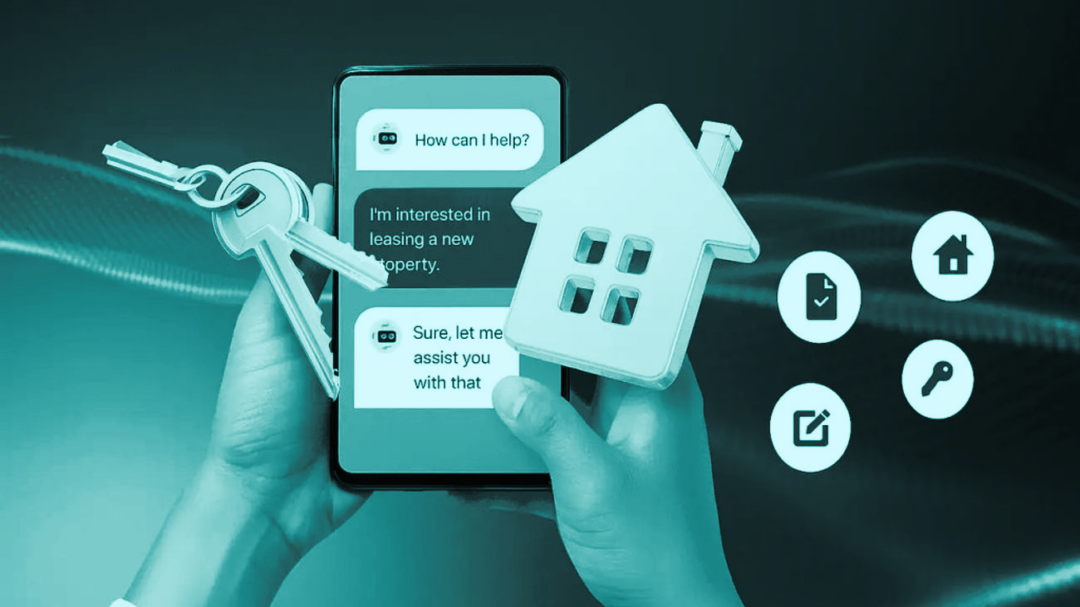
Modern approaches use AI-powered agents (so-called Agentic AI) that can autonomously handle routine tasks:- Initial processing of inquiries via chat, email, or voice (24/7), triage, and forwarding.
- Automatic creation and prioritization of maintenance orders, contractor dispatch, and progress tracking.
- Financial processes such as automated settlements, payment reminders, reconciliation, and forecasting.
The decisive advantage: Skilled staff are relieved of repetitive work and can focus on advisory services, problem-solving, and strategic topics. At the same time, error rates and processing times decrease. Such systems are scalable and particularly attractive for medium to large portfolios.
- Leverage Data for Proactive and Transparent Management
A central data foundation enables analyses (e.g., identifying recurring damage patterns for preventive maintenance) and the creation of meaningful reports for owners. Transparency builds trust and reduces potential conflicts. - Take Change Management and Qualification Seriously
Technology alone is not enough. A clear digital strategy, phased rollout (e.g., pilot for repair requests), training, and staff involvement are essential. Even smaller management companies now have access to modular, cloud-based solutions that do not require massive investments.
These measures do not have to be an all-or-nothing project. Many managers successfully start with quick wins (e.g., a request portal and messenger integration) and expand gradually. Experience from other countries shows: The ROI appears in higher tenant satisfaction, fewer follow-up inquiries, better scalability, and ultimately greater appeal as a property manager in a competitive market.
Conclusion: Pragmatic Progress Instead of Radical Change
Germany has a solid but still strongly analog core in property management. The good news: The need to catch up is clearly identifiable, and proven European practices as well as modern technologies offer tested paths to noticeably improve communication and processes—without abandoning the strengths of personal service.
A smart combination of process standardization, hybrid communication channels, integrated platforms, and targeted automation (including AI for routine tasks) creates efficiency gains that benefit everyone: tenants through faster, more transparent processes; owners through better oversight; and managers through relieved teams and scalable structures.
Companies that take this path pragmatically, with an eye on real operational challenges, position themselves for the future. Approaches like those from RAAY RE illustrate how Agentic AI can take over repetitive administrative tasks and free up teams to focus on value-adding activities. Such practical, operationally grounded solutions help sustainably close the gap between analog tradition and modern efficiency.
The future of property management is neither purely analog nor purely digital – it is intelligently hybrid. Those who set the course now will gain long-term advantages in efficiency, satisfaction, and competitiveness.